Your followers are rented. How Indian creators build an audience they own
By Madhur Tyagi · · 8 min read

Arjun had 2.4 lakh followers. On Monday his reel got 9,000 views. The same kind of reel got 1.1 lakh a month ago.
He had changed nothing. The app had.
Arjun is a made up Jaipur finance creator. If your reach has ever dropped for no reason, you have met him.
The short answer
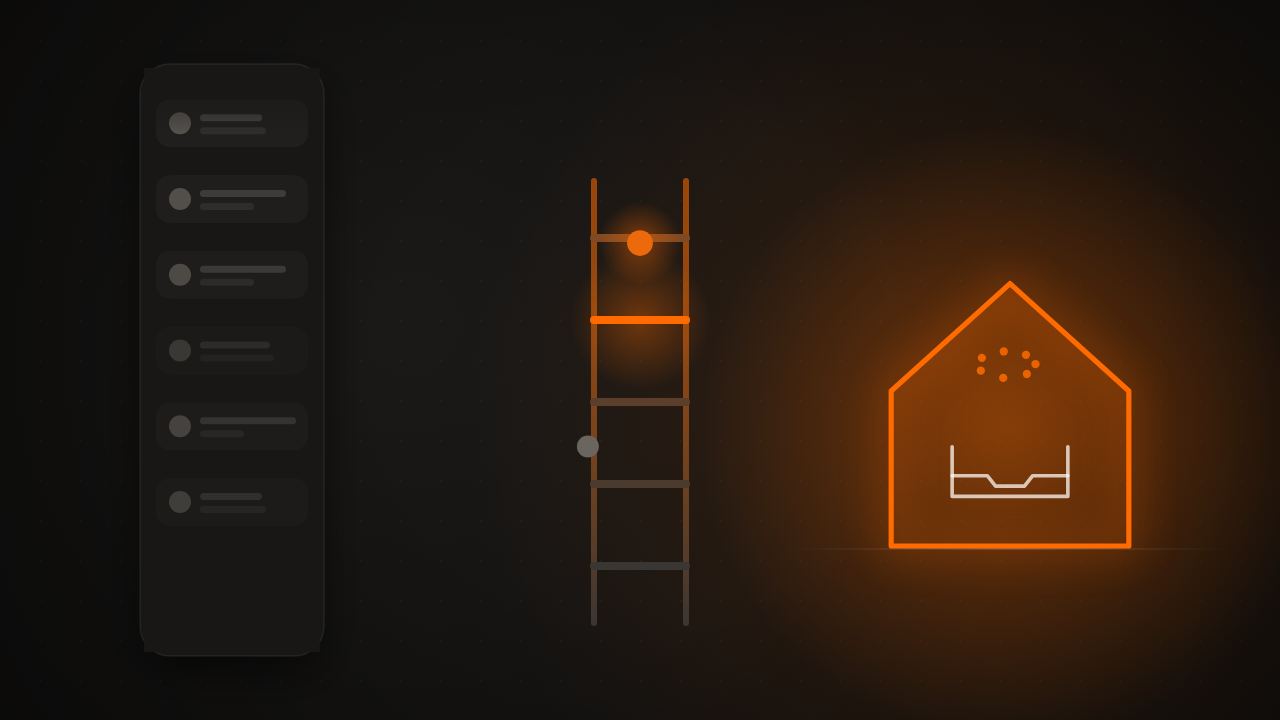
Followers belong to the app, so your reach can fall overnight. An owned audience is people who said yes to hear from you on WhatsApp or email. Climb the Rent to Own Ladder with a post that invites a reply, a DM that gives then asks, one useful weekly note and one clear offer a month. Track your Owned Share monthly.
Your followers are not yours. They belong to the app. The app decides who sees your next post, and it can change its mind tonight.
An owned audience is different. It is a list of people who said yes to hear from you directly, on WhatsApp or by email. No update can take them away, because the line runs straight from you to them.
I have built DM and WhatsApp systems since 2018. The creators who sleep well on launch nights are not the ones with the most followers. They are the ones with a list.
Key takeawayFollowers are rented. People who said yes to hear from you are owned.
Here is why followers count for less in 2026, the Rent to Own Ladder, and seven checks to climb it with a 20 minute weekly habit.
How much of your audience do you own?
Arjun has one big wish. He wants to launch a ₹2,999 money course for young earners and fill a batch without paying for ads. He has 2.4 lakh followers. So he should be fine. Right?
Do the count he did. Write down two numbers. How many followers do you have on your biggest app? And how many people could you message tomorrow on WhatsApp or email, people who said yes to hear from you?
Divide the contacts by the followers. That is your Owned Share. Arjun had about 600 contacts, from an old Google form. His Owned Share was 0.25%. Put your own numbers in below. Nothing leaves your phone.
Up next You have your Owned Share. Next: why followers were never yours, and what a kirana uncle’s notebook has to do with it.
Why does this happen at all?
Think of a shop in a mall. The mall brings crowds, and that is great. But the mall owner sets the rent, the timings and which floor you get. If he moves you to the back corner, your crowd drops, even though your shop did not change.
An app works like that mall. Your followers are the crowd walking past. The app decides how many walk past your door each day.
Now think of the kirana uncle near your home. He has a notebook with the names and numbers of 200 families. When fresh mangoes come in, he sends one message and sells out by evening. He does not wait for anyone to walk past. That notebook is an owned audience.
And the mall is very crowded. At WAVES 2025, YouTube said more than 100 million channels in India uploaded content in the past year, and over 15,000 of them crossed one million subscribers.
A very crowded mall
Money is spread thin too. A BCG report released at the same summit counted 2 to 2.5 million active Indian creators with over 1,000 followers each. It found that just 8 to 10% of them make money from their content well.
What does a bad reach week cost you?
When Arjun’s reach fell, his launch plan fell with it. A reel that reached 1.1 lakh people might have brought 40 course buyers. A reel that reached 9,000 brought three.
That is ₹2,999 times 37 buyers he never met. Over ₹1 lakh, from one algorithm change he did not make. These are Arjun’s made up numbers. Yours may be bigger or smaller, but the shape is the same.
Brand money is not steady either. In a 2025 report by The Nod Mag, a Delhi fitness creator said brands used to approach her every few days. Now it is a couple of times a month.
When reach, brands and the app can all change without asking you, the list is the part of your business you control.
Up next So what does climbing out of the mall look like? Five rungs, and one big jump.
The Rent to Own Ladder
The ladder has five rungs. Follower, contact, reader, buyer, member. Each rung is a person trusting you a little more.
The Rent to Own Ladder
Five rungs from rented to owned
- 5MemberStays, renews, brings a friend
- 4BuyerPays you once
- 3ReaderOpens what you send
- 2ContactSaid yes to hear from you
- 1FollowerThe app decides who sees you
The big jump is from follower to contact. That is where a person stops being rented and starts being yours.
Arjun was stuck on the bottom rung with 2.4 lakh people. The seven checks below are how he climbed, one rung at a time.
1. Does one post a week invite a reply?
Most posts end with “follow for more”. That keeps people on the app. Instead, end one post a week with a clear, useful ask.
For Arjun: “Comment BUDGET and I will send you my one page salary plan.”
The thing you give must be small and genuinely useful. A one page plan, a checklist, a script. Not a 40 page ebook nobody opens. Arjun’s salary plan took him one evening to make.
Up next People are commenting BUDGET now. But a comment is still rented. What does Arjun send next, and in what order?
2. Does your DM give, then ask?
When someone comments the keyword, send the thing you promised in their DM. Then ask permission to stay in touch. Give, then ask.
Give, then ask
BUDGET
Here is your salary plan! 📄 salary-plan.pdf
Every Sunday I send one short money tip on WhatsApp. Want me to add you? Just reply YES. You can stop anytime.
YES 🙌
- Give the free thing they asked for, in the DM.
- Ask in plain words, and say how often you will write.
- Record the yes, the date and one word on why they came.
Here is your salary plan! Every Sunday I send one short money tip on WhatsApp. Want me to add you? Just reply YES. You can stop anytime.
Arjun used to send a link and nothing else. Now he gives, then asks. About one in three people say yes.
Up next The yeses start coming in. Then Arjun realises he cannot remember who said yes, or when.
3. Do you keep a record of every yes?
India’s data protection law, the DPDP Act, is built on consent. So asking is both polite and smart. Keep a simple record: the name, the number, the date they said yes, and where they came from.
A plain sheet is enough to start. Arjun keeps his in a sheet with five columns. When someone says stop, he deletes them the same day.
Up next The sheet is clean. But 3,000 contacts are not all the same. Two seconds per person changes that.
4. Does each contact carry one word about why they came?
When someone says yes, save them with one word about why they came: “budget”, “SIP”, “tax”. It takes two seconds.
Later this word is gold. When Arjun makes a tax video, he tells the “tax” people. When he launches a course on budgeting, he tells the “budget” people. The right offer reaches the right person, and nobody feels spammed.
Up next Now every contact has a tag. But a list that never hears from you forgets you in three weeks.
5. Do you send one note a week worth opening?
Every week, send one short, useful message. A tip, a mistake you made, a question you got. No pitch in most weeks.
This is the reader rung. People open your note because the last one helped. Miss three weeks and they forget why they joined. Send five sales messages and they leave.
The app could hide his reels. It could not hide his Sunday note.
A word on cost. WhatsApp Business charges for marketing messages, and the rates for India changed recently. If your list is big, read our plain guide to WhatsApp Business pricing in 2026 before you send to everyone. An email list costs little to run, so many creators keep both.
Up next His Sunday note gets opened. So when does Arjun finally ask for money, and how?
6. Do you make one clear offer a month?
Once a month, tell your list about the thing you sell. A ₹499 guide, a live class, a program. One offer, one link, one deadline. Then reply to every question by hand.
This is the buyer rung. A small, honest offer turns trust into a habit of buying from you. The people who buy a ₹499 guide are the ones most likely to buy your ₹2,999 course later.
Look at Ankur Warikoo. In May 2026 he said his courses business had served 5 lakh students and made ₹100 crore in sales since 2020, with ₹25 crore in profit, as Hindustan Times reported. Then he turned the courses into one subscription, with all courses for the price of one. A move like that needs a direct line to your buyers.
Key takeawayWhen reach, brands and the app can all change without asking you, your list is the part you control.
Up next The offer works. But how does Arjun know if his business is getting safer, month after month?
7. Do you check your Owned Share every month?
On the last day of each month, write down two numbers: followers and contacts. Divide. That is your Owned Share.
There is no fixed benchmark, so do not compare yourself to anyone. Compare yourself to last month. If the number climbs, your business is getting safer. If it stalls, look at checks 1 and 2 again.
Members are the top rung. They renew, join your next batch and tell a friend. You will see them in your sheet as the names that buy twice.
Up next Seven checks in eight weeks. So did Arjun’s batch fill, without a single ad?
What happened to Arjun?
Arjun added the BUDGET line to one reel a week. In eight weeks, 3,200 people said yes on WhatsApp. His Owned Share went from 0.25% to about 1.3%. Small, but it was his.
He sent one useful Sunday note each week. In week nine, he told his list about the ₹2,999 course and answered every question himself. The app could still hide his reels. It could not hide his Sunday note.
His batch filled. His next reel got 12,000 views, and he did not panic. His business no longer lived inside one app.
Key takeawayMeasure your business by who you can reach tomorrow without asking an app.
Which fix should you start with?
Start with checks 1 and 2 this week. One post with a keyword, one DM that gives then asks. Those two alone move people from rented to owned.
Add checks 3 and 4 the day the yeses start, because a list without records is a mess by week three. Start the weekly note (check 5) once you have 50 contacts. Make an offer (check 6) after four notes.
The numbers behind the shift
| What | Number | Source |
|---|---|---|
| Indian channels that uploaded to YouTube in a year | 100 million+ | YouTube, WAVES 2025 |
| Indian channels past one million subscribers | 15,000+ | YouTube, WAVES 2025 |
| Active Indian creators (over 1,000 followers) | 2 to 2.5 million | BCG via PIB, 2025 |
| Share of them who monetise well | 8 to 10% | BCG via PIB, 2025 |
| Warikoo courses: students, sales, profit since 2020 | 5 lakh, ₹100 crore, ₹25 crore | Hindustan Times, May 2026 |
Your owned audience checklist
0/100
Owned audience score
Tick what is true for you this month
Each tick updates your score and climbs the ladder. Be strict: “sometimes” is a no.
Useful? Send it to your team or keep the checklist.
Opens WhatsApp with the link ready. You choose who gets it. Save gives you a one page checklist to print or keep as a PDF.
What should you remember?
- Followers are rented. Contacts who said yes are owned.
- Climb the Rent to Own Ladder: follower, contact, reader, buyer, member.
- Give in the DM, then ask for a yes. Keep a record of every yes.
- Send one useful note a week, and one clear offer a month.
- Track your Owned Share every month: contacts divided by followers.
Sources (checked 22 October 2026)
- YouTube India blog: INR 21,000 crore paid to Indian creators, 5 May 2025 (100 million+ channels in India uploaded in the past year, 15,000+ crossed one million subscribers)
- PIB: BCG report on India’s creator economy, WAVES 2025 (2 to 2.5 million creators with over 1,000 followers, 8 to 10% monetise effectively)
- The Nod Mag: Indian creators on smaller deals and pending payments (brand approaches fell from every few days to a couple of times a month)
- Hindustan Times: Ankur Warikoo on converting his ₹100 crore courses business into a subscription, 17 May 2026 (5 lakh students, ₹100 crore in sales, ₹25 crore in profits, all courses for the price of one)
Arjun, his numbers and his story are made up to show the method. They are not results from a real account.
Questions people ask
What is an owned audience?
An owned audience is people who said yes to hear from you directly, on WhatsApp or by email. Unlike followers, you can reach them without an app deciding who sees your message.
Is WhatsApp or email better for creators in India?
Most Indian readers reply faster on WhatsApp, and email costs less to run at scale. Many creators collect both, use WhatsApp for short notes and replies, and email for longer letters.
How do I get followers to join my WhatsApp list?
Give something useful for a comment keyword, send it in the DM, then ask in plain words if they want a weekly note. Add just the people who say yes, and tell them they can stop anytime.
What is a good Owned Share for a creator?
There is no fixed benchmark. Track your own number every month, contacts divided by followers, and aim for it to climb steadily.
How often should creators message their list?
Once a week is a good rhythm for most. Keep most messages useful with no pitch, and share one clear offer a month.
Know a creator whose reach just crashed? Send them Arjun’s story.
Opens WhatsApp with the link ready. You choose who gets it.
THA Circle
Use AI. Still sound human.
A free WhatsApp channel for founders, coaches and creators who want AI to save time without losing the human touch.
- On joining A welcome pack: 3 AI prompts and 5 chat scripts you can copy today.
- Monday A short script for your own chats. Ten minutes to try.
- Wednesday One real chat taken apart, names removed.
- Friday Human of the Week. A moment a customer felt seen.
Free. Takes ten seconds. Channel followers stay private. Leave any time.
The Sunday note
How people pay attention, and how to earn it. One email a week.
I study AI, attention, human psychology and marketing. Every Sunday I send one idea and one script for your chats. Five minutes to read. Reply any time, I read every answer.
Get the Sunday noteFree. Leave any time. Your email stays private.
 From WhatsApp Channel to paid programs
 Build a personal brand from zero
 Followers but no sales? A path for creators