Why COD orders come back: 7 ways to cut RTO in India
By Madhur Tyagi · · 10 min read
Pooja’s Diwali sale brought 300 orders in four days. Two weeks later, 90 boxes of her mother’s pickle came back.
Same jars. Same tape. Now with a courier bill stuck on top.
Pooja is a made up founder from Kolhapur. If you sell on cash on delivery, you know her shelf.
The short answer
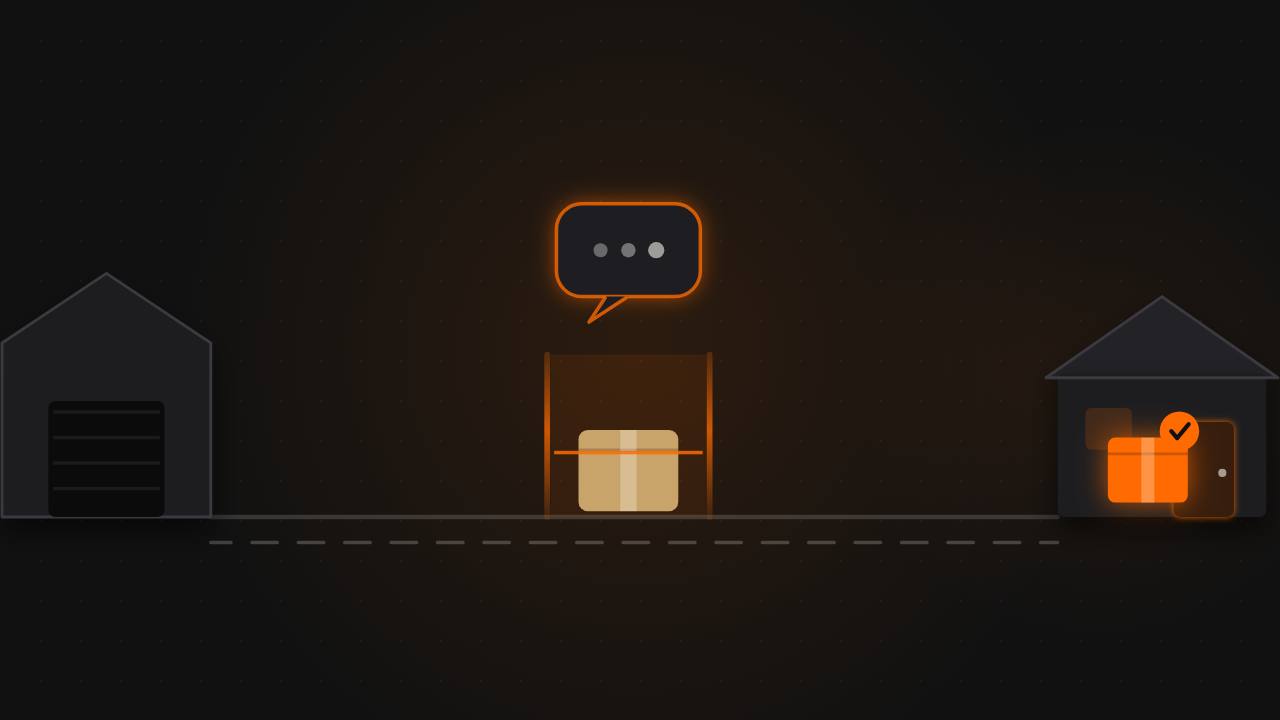
RTO (return to origin) means a parcel comes back to you unsold. In India it hits cash on delivery orders hardest, because the buyer can say no at the door. Most returns come from four gaps: a half address, a changed mind, nobody home and a slow parcel. Close them with seven habits: a strict address form, a WhatsApp check before packing, rules for risky orders, a reason to prepay, dispatch in a day, a call on every failed delivery and a reason tag on every return.
Pooja had one dream. She wanted her Aai’s mango pickle on kitchen shelves across India, not just in Kolhapur.
So she left her job, built a small website and ran ads. Diwali came, and the orders poured in. Most buyers picked cash on delivery. She packed every box herself, late into the night. If Diwali is close, plan your replies with this WhatsApp plan for the last 2 weeks.
Then the parcels started coming back. Box after box. By the end of the month, a whole shelf in her godown held jars nobody wanted.
She had paid to ship each box twice, and sold nothing.
Key takeawayMost COD returns are not bad luck. They are a conversation that never happened before the parcel left.
I have run performance marketing for 8+ years, for 25+ brands since 2017. I see Pooja’s shelf in many D2C brands. The good news: most of it is fixable. Not with a new courier. With a few small habits.
What is RTO, in plain words?
RTO means return to origin. A parcel leaves your warehouse, does not get delivered, and travels back to you.
You pay the courier to send it. You often pay again to get it back. The product sits in a truck for days. Sometimes it comes back damaged or stale.
COD means cash on delivery. The buyer pays the delivery person at the door, not online.
Most RTO lives in COD orders. Shipway’s ShipNotes report for FY25 says under 2% of prepaid orders were returned. For non prepaid orders, the number was nearly 26%. That is about one parcel in four.
Why do COD orders come back at all?
Think of a chai stall. You pay when the cup is in your hand. The stall never has a “return”.
A COD order is the opposite. The buyer says yes today, with zero money down. The real decision happens days later, at the door. In those days, a lot can change.
So a COD order comes back for four simple reasons:
- They could not be found. Half an address, a wrong pin code, a phone that does not ring.
- They changed their mind. It was a late night tap. Or a cousin in the family WhatsApp group found it cheaper.
- They were not home. Or nobody had cash ready when the parcel came.
- It took too long. The wish faded before the parcel arrived.
Every fix below closes one of these four gaps. When Pooja finally called 20 buyers whose boxes came back, she heard all four.
What does each returned parcel cost you?
A return is not one loss. It is four.
You lose the shipping to the buyer and back. You lose the ad money you spent to get that order. You lose the time spent packing it. And the stock is stuck while it travels, so you cannot sell it to someone who wants it.
Most founders count just the reverse shipping. That is like counting runs and ignoring the balls faced.
Put your own numbers in below. Nothing is sent anywhere.
When Pooja did this sum, she stopped thinking of RTO as bad luck. It was a line on her bill, every single month.
1. Is the address complete before you ship?
Two of Pooja’s returned boxes went to “Near temple, Shivaji Nagar”. There are many temples. There are many Shivaji Nagars.
Why it leaks: your kirana uncle knows your house. A courier in a new city does not. A short address form saves the buyer five seconds and costs you a parcel.
The test: open your last 30 COD orders. Count the ones with no house number or no landmark.
The fix: make house or flat number, street, landmark and pin code required fields. Check the pin code matches the city. Do not ship an order with a blank landmark until someone confirms it.
Copy this (note under the address box):
“Please add your house number and a landmark. It helps our delivery partner find you in one go.”
Key takeawayA complete address costs the buyer five seconds and saves you a parcel.
Up next A full address gets the box to the right door. But will the buyer still want it? Pooja’s quiet Tuesday answered that.
2. Do you check every COD order on WhatsApp before packing?
Pooja’s turn came on a quiet Tuesday. She messaged ten new COD buyers before packing. Seven said yes. Two fixed their address. One said, “Sorry, ordered by mistake.” That box never left her table.
Why it leaks: an order placed at midnight is a wish, not a promise. A short message turns the wish into a real yes, while you can still stop the parcel.
The test: for one week, count how many COD orders you pack without any contact with the buyer.
The fix: send every COD buyer a short WhatsApp message soon after they order. Ask them to reply with one number. Pack the clear yes orders. Call the ones who do not reply, before the day’s dispatch.
Copy this (order check message):
“Hi [name], this is [your name] from [brand]. Your order for [product] is ready to pack, cash on delivery, to [area] [pin code]. Reply 1 to confirm or 2 to change the address.”
Copy this (if they do not reply in a few hours):
“Hi [name], just checking before we send your [product]. Should we pack it for you today?”
A person can send these. Tools can help too. Our page on WhatsApp automation for D2C brands shows how a draft goes out with a person in charge. For more on where an agent fits, see how Indian D2C brands use AI agents.
Up next Seven yes, two fixes, one cancel. Then Pooja spotted who kept sending boxes back.
3. Do you treat risky orders differently?
Pooja saw a pattern. Many returns were new buyers, big orders, from a few pin codes.
Why it leaks: not every order has the same risk. A buyer who already paid you twice is not the same as a stranger ordering a large gift hamper at 2 AM.
The same ShipNotes report found return rates on COD orders ranged from 18% in Vadodara to 35% in Patna. Where your buyer lives changes the odds.
The test: sort your last three months of returns by pin code. Are a few pin codes carrying most of them?
The fix: make simple rules. A new buyer on COD gets the WhatsApp check every time. A large COD order gets a call before dispatch. A pin code with many returns gets one extra check, or online payment, until it improves.
Copy this (call script for a large COD order):
“Hi [name], I am calling from [brand] about your order of [product]. We want to make sure it reaches you. Is this address right, and will someone be home with cash on [day]?”
Up next Rules catch the risky orders. But one kind of buyer almost never sends a box back, and Pooja had been ignoring them.
4. Is paying online the easier choice?
Pooja noticed something else. Her prepaid buyers almost never sent anything back.
Why it leaks: money paid is a decision made. A buyer who prepaid has already said yes with their wallet. So the more of your orders are prepaid, the smaller your RTO.
Unicommerce’s India D2C Report 2026 shows the gap clearly. In the festive quarter, COD orders came back at 58%. Prepaid orders came back at under 15%. The report says the brands that brought RTO down to 21% by March all had a reason for buyers to prepay. Others were still near 39%.
The test: check what share of your orders are prepaid. Then look at your checkout. Is there any reason to choose online payment?
The fix: you do not have to stop COD. Make prepaid the easy, sweet choice. A small cashback, a free sample, faster dispatch for prepaid orders. Say it clearly at checkout.
Copy this (line at checkout):
“Pay online and we pack your order today, with a small gift inside.”
Up next Even a happy buyer can say no if the parcel is slow. How slow is too slow? The data is sharp.
5. How fast does your parcel reach the buyer?
During the Diwali rush, Pooja shipped late. Some boxes took a week. By then, the buyer had moved on.
Why it leaks: a wish has a shelf life, like milk. The longer the wait, the more time a buyer has to change their mind.
ShipNotes found this in the data. COD orders attempted within one to two days were returned 22% of the time. At three to five days, it was 27%. After more than five days, it rose to 35%.
The test: for your last 50 orders, check the gap between order and the day delivery was tried.
The fix: dispatch within a day. Tell the buyer when to expect the parcel. Send the tracking link on the day it ships.
Copy this (dispatch message):
“Hi [name], your [product] left our warehouse today. It should reach you by [day]. Please keep [amount] ready if you chose cash on delivery.”
Up next Fast parcels still miss people. What you do when nobody is home decides if the box comes back.
6. Do you call when a delivery fails?
One buyer told Pooja, “The delivery boy came when I was at work. Then the parcel just went back.”
Why it leaks: when a delivery fails, the courier marks an NDR. NDR means non delivery report. If nobody acts on it quickly, the parcel starts its trip back to you.
The test: check your courier panel today. How many NDRs are more than a day old with no action?
The fix: treat every NDR like a missed call from a buyer. Message or call within 24 hours. Fix the address, or lock a better time for the next try.
Copy this (NDR message):
“Hi [name], our delivery partner could not reach you today. When should they come back, and is this address right? Reply here and we will sort it.”
Up next Six habits in place. One simple sheet tells Pooja which one matters most each week.
7. Do you know why each parcel came back?
At the end of the month, Pooja made a simple sheet. One row for every return. One word for the reason.
Why it leaks: if you do not know why parcels come back, you fix the wrong thing. It is like a captain changing the bowler when the problem is the field.
The test: can you say, right now, the top reason for your returns last month?
The fix: tag every return with one reason: address, not reachable, refused, not home or late. Every week, sort the tags by pin code, product and courier. Change one rule based on what you see.
Copy this (weekly question for your team):
“Which reason sent back the most parcels this week, and what one rule do we change?”
Up next Seven fixes is a lot for one month. Your reason tags tell you which one to start on Monday.
Which fix should you start with?
Pooja did not fix everything in one week. She started with fix 2, the WhatsApp check, because it cost nothing. Then she made the address form strict. By Holi, the shelf in her godown was almost empty. Last week, a jar of Aai’s pickle reached a buyer in Guwahati. It was paid before it left Kolhapur.
Your reason tags tell you where to start:
- Mostly “not found”: fix 1, the address form, and fix 6, the NDR call.
- Mostly “refused”: fix 2, the WhatsApp check, and fix 4, the prepaid nudge.
- Mostly “not home”: fix 5, the dispatch message with a delivery day.
- No idea: fix 7. Start tagging today.
RTO feels like a courier problem. Most of the time, it is a conversation that never happened before the parcel left. The same thing happens with leads. Our funnel leak audit walks through it step by step.
Want to find the leaks before the parcel stage too? The free Growth Leak Check takes 2 minutes and shows your top 3 leaks, each with one fix.
Your RTO checklist
0/100
Your RTO safety score
Tick what is true for your brand
Each tick updates your score and the box. Be strict: “mostly” is a no.
Useful? Send it to your team or keep the checklist.
Opens WhatsApp with the link ready. You choose who gets it. Save gives you a one page checklist to print or keep as a PDF.
What should you remember?
- RTO is a parcel that comes back unsold. It lives mostly in COD orders.
- A COD order is a yes with zero money down. The real decision happens at the door.
- Four gaps cause most returns: not found, changed mind, not home, too slow.
- A WhatsApp check before packing costs nothing and stops many returns.
- Make prepaid the easy choice. You do not have to stop COD.
- Ship within a day, and call on every failed delivery within 24 hours.
- Tag every return with a reason. Fix the biggest reason before the rest.
- Getting junk orders from ads too? Read our guide to fake leads from Meta ads.
Sources (checked 21 October 2026)
- MediaBrief: ShipNotes reveals 26% RTO rate on COD orders across India (Shipway ShipNotes FY25: under 2% of prepaid orders returned, nearly 26% of non prepaid, city range 18% Vadodara to 35% Patna, 22% / 27% / 35% by days to delivery attempt)
- Unicommerce: India D2C Report 2026 (built on 410M+ shipments across 6,000+ brands: COD 58% vs prepaid under 15% in the festive quarter, brands at 21% RTO by March vs others near 39%, prepaid incentive)
- Amazon Shipping India: RTO explained (what RTO and NDR mean, the main causes, acting on an NDR within 24 hours)
Questions people ask
What is a good RTO rate for COD orders in India?
There is no single right number, because it depends on your product, price and pin codes. As a guide, Shipway’s FY25 ShipNotes data puts the average at nearly 26% for non prepaid orders and under 2% for prepaid. If you are well above 26% on COD, start with the address form and a WhatsApp check before packing.
How do I reduce RTO on COD orders?
Make the address form strict, confirm every COD order on WhatsApp before you pack it, add an extra check for risky orders, give buyers a reason to prepay, ship within a day, act on every failed delivery within 24 hours, and tag every return with a reason.
Should I stop offering cash on delivery?
Usually not. Many Indian buyers still want it, and stopping it can cut your orders. A better path is to make prepaid the easier choice with a small reward, and to check COD orders before they ship.
Does WhatsApp order confirmation reduce RTO?
It closes two of the biggest gaps. Buyers who ordered by mistake can cancel before you ship, and buyers with a wrong address can fix it. Keep the message short, ask for one number as a reply, and call the buyers who stay silent.
What is the difference between RTO and a return?
A return happens after delivery, when the buyer sends the product back. RTO happens before delivery, when the parcel never reaches the buyer and goes back to you. Both cost money, but RTO is mostly preventable before the parcel leaves.
Know a founder with a shelf of returned boxes? Send them Pooja’s story.
Opens WhatsApp with the link ready. You choose who gets it.
THA Circle
Use AI. Still sound human.
A free WhatsApp channel for founders, coaches and creators who want AI to save time without losing the human touch.
- On joining A welcome pack: 3 AI prompts and 5 chat scripts you can copy today.
- Monday A short script for your own chats. Ten minutes to try.
- Wednesday One real chat taken apart, names removed.
- Friday Human of the Week. A moment a customer felt seen.
Free. Takes ten seconds. Channel followers stay private. Leave any time.
The Sunday note
How people pay attention, and how to earn it. One email a week.
I study AI, attention, human psychology and marketing. Every Sunday I send one idea and one script for your chats. Five minutes to read. Reply any time, I read every answer.
Get the Sunday noteFree. Leave any time. Your email stays private.
 Cut fake cash on delivery orders
 COD to prepaid: messages that get buyers to pay
 What is a good ROAS for paid ads?