Should your WhatsApp bot say it is AI? What a study of 6,200+ customers found
By Madhur Tyagi · · 9 min read
In short
Yes, say it, and say it well. In a study of 6,255 customers on outbound voice sales calls, telling people up front that the caller was a bot cut purchases by more than 79.7%. People saw the bot as less knowledgeable and less caring. So disclose in one calm line, then prove knowledge, sound warm and offer a person.
Why trust this: written by Madhur Tyagi, founder of The Human Algorithm. 8+ years in performance marketing, 25+ brands since 2017, ₹1Cr+ in ad spend managed across 9+ clients, and DM automation since 2018.

Picture Kavya. She sells handmade skincare from Bengaluru, from ₹450 to ₹2,200.
Her WhatsApp bot was called “Riya”, with a smiling photo. One night a buyer asked, “Riya, are you a real person?” The bot changed the topic.
Kavya is made up. The question is real for many Indian sellers, and a big study has a surprising answer.
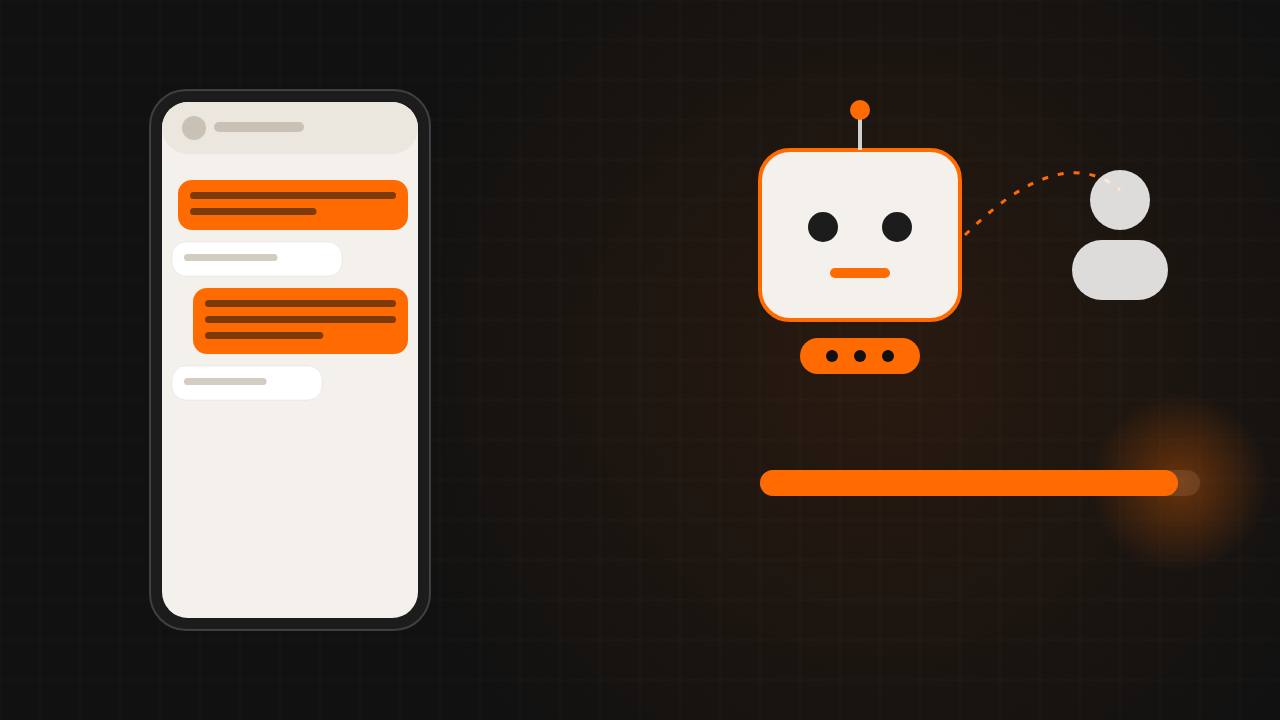
More Indian brands now let a bot answer WhatsApp and site chat. Sooner or later, a buyer asks: “Am I talking to a real person?”
Many owners worry that saying “I am an AI assistant” will scare buyers away. A well known study suggests the worry is real. The answer is still to say it, in one calm line, and then fix the reasons people distrust bots: show you know the answer, sound warm, and make a person easy to reach.
This guide covers what the study found, why it was about voice calls and not chat, what the law says, and the exact lines to use. Every source was read on 26 October 2026.
Key takeawaySay it is AI, in one calm line. Then fix the two doubts: knowing less and caring less.
I have spent 8+ years in performance marketing, with 25+ brands since 2017, and I have set up DM automation since 2018. The bots that kept buyers were the honest ones that also knew their stuff.
AI disclosure in four numbers
Up next You know honesty wins, done well. Next: what the 6,200+ customer study really found.
What did the study on chatbot disclosure find?
Telling people up front that they were talking to a bot cut purchases by more than 79.7%. The study is “Machines vs. Humans” by Xueming Luo, Siliang Tong, Zheng Fang and Zhe Qu, published in Marketing Science (volume 38, issue 6) in 2019.
A financial services company randomly assigned 6,255 customers to get an outbound sales call, either from a bot or from a human worker. The calls offered to renew a loan. When the bot did not say what it was, it sold as well as skilled staff and about four times better than new staff. When it said it was a machine before the talk began, purchases fell by more than 79.7%.
Why? Customers who knew it was a bot were curt and ended calls sooner. They felt the bot knew less and cared less, even though it gave the same answers. The drop was smaller when the bot said what it was after the conversation, and smaller with customers who had used AI before.
Does a voice call study apply to WhatsApp chat?
Not directly. The study was on outbound voice sales calls. It did not test chat. The company called the customer, the calls followed a tight script, and the product was a loan.

WhatsApp is different. The buyer usually starts the chat, reads at their own pace and often half expects a bot. So do not read 79.7% as the drop you will see on WhatsApp. Read the study as a warning about how people judge machines: they assume a bot knows less and cares less. That part is worth planning for.
From our own data: On 25 October 2026, The Human Algorithm sent the same short buying question to 15 Indian D2C brands, as a buyer would. 4 of them answered in a site chat. All 4 replies came from bots, all within about 3 minutes. One bot used a human name. 2 of the 4 answered both parts of the question. This is an early sample from day 1 of our Reply Report 2026, with no brand named. It updates after 1 November 2026.
What does the law say about telling people they are talking to AI?
In the European Union, yes. Article 50(1) of the EU AI Act says AI systems that talk directly with people must be built so people are told they are talking to an AI system, unless it is obvious. Article 50(5) says this must be told clearly, no later than the moment the chat begins. These rules apply from 2 August 2026. If you sell to buyers in the EU, take note.
In India, we did not find a rule that says a chat bot must announce it is AI. Ask your lawyer about your case. The WhatsApp Business Messaging Policy does say businesses must not “confuse, deceive, defraud, mislead, spam, or surprise people” with their messages. A bot that says it is human when asked would sit badly with that.
From hidden to honest
The honest bot plan
- 1Say it plainlyopening lineOne calm line, a person a tap away.
- 2Honest nameprofileYour brand or your own name.
- 3Answer exactlyevery replyPrice, stock, size, date.
- 4Sound warmevery replyTheir name, their worry, your voice.
- 5Hand overmoney and problemsA person, with the details passed on.
Each step below keeps the honesty and fixes the doubts the study found.
Up next Step 1 is the line every buyer reads before anything else.
1. How should a bot say it is AI?
In its opening message, in one calm line, with no apology. Say what it can do and that a person is a tap away. Keep it short so the buyer's question still comes next.
Kavya's bot opened with “Hi, I'm Riya! 😊” and a stock photo.
Why it matters: The study shows people judge a bot more harshly once they know. Hiding it is not the fix, because a buyer who finds out later feels tricked. A calm, confident line sets the frame on your terms.
Do this: “Hi, I am Kavya's AI assistant. I can check stock, prices and delivery right now. Type 1 any time to reach Kavya's team.” Then answer what they asked.
Up next The bot is honest from the opening line. Next: the name that avoids the awkward question.
2. What name should the bot use?
An honest one. Use your brand or your own name, like “Kavya's assistant” or “Kavya Naturals Assistant”. Avoid a human name and a human photo that suggest a real person.
Kavya's bot used a woman's name and a smiling stock photo, so buyers thought Riya was staff.
Why it matters: A human name invites the question “are you real?”, and every answer to it from a bot named Riya feels awkward. An honest name removes the trap.
Do this: Rename the profile and the greeting. Use your logo or a simple icon instead of a stock face. If a buyer asks “are you a real person?”, the reply is: “I am an AI assistant. Want me to connect you to Kavya's team?”
The same question
Before
Riya, are you a real person?9:42 PM
I'm here to help! 😊 Have you seen our new serum?9:42 PM
(Feels tricked. Leaves.)
After
Are you a real person?9:42 PM
I am Kavya's AI assistant. I can check stock, prices and delivery now. Type 1 for Kavya's team.9:42 PM
OK. Does the vitamin C serum ship to Kochi?9:43 PM
Yes, 30 ml is ₹890, in stock, 4 to 5 days to Kochi.
Up next No more trap. Next: proving the bot knows the answer.
3. How does a bot show it knows the answer?
By answering the exact question with exact facts, in the reply itself. Price, stock, size, delivery date. Vague replies confirm the fear that bots know less.
When a buyer asked if the vitamin C serum suits oily skin and ships to Kochi, Kavya's bot replied “Great choice! Check our website for details.”
Why it matters: The study found people saw a disclosed bot as less knowledgeable, even when it was not. A specific answer is the quickest proof. In our early sample, 2 of 4 bot replies missed half of a simple question.
Do this: “Yes, the vitamin C serum suits oily skin. It is a light gel with no oil. The 30 ml bottle is ₹890, in stock, and it reaches Kochi in 4 to 5 days.” Feed the bot your real price list, stock and delivery times, and test it with 10 real questions every week.
Up next The answers are exact. Next: sounding like you care.
4. How can a bot sound warm without pretending to be human?
Use the buyer's name, notice their worry, and keep the tone of your kindest salesperson. Warmth comes from care. The bot never needs to claim it is a person.
Kavya's bot sent the same cheerful line to a buyer with a skin rash and to a buyer asking for a gift.

Why it matters: The study found people felt a disclosed bot cared less. Small signs of care, like using their words back and a gentle tone, answer that doubt.
Do this: “Sorry to hear about the rash, Meera. I would not suggest the serum until it heals. Shall I ask Kavya's team to suggest something gentle?” Write 5 example replies in your voice and give them to the bot as a style guide.
A bot does not lose trust by saying it is a bot. It loses trust by pretending, and by not knowing the answer.
Up next The tone is warm. Next: when a person should take over.
5. When should a person take over, and how?
For money, problems and big decisions: discounts, refunds, complaints, health questions and large orders. Make the handover easy, and tell the buyer who is answering now.
Kavya's bot tried to handle refunds itself and offered random discounts.
Why it matters: People in the study who knew it was a bot bought less, partly because they trusted it less on serious things. A person for serious moments keeps trust where it matters most.
Do this: “This needs Kavya's team. I have shared your order details, so you will not need to repeat them. Ankit from our team will reply here by 11 AM.” Then make sure Ankit does. Keep discounts and refunds for a person to approve.
| Step | What you do | What it does |
|---|---|---|
| 1. Say it plainly | One calm line in the opening message | Honest from the start, no later shock |
| 2. Honest name | Brand or owner name, a logo | Removes the “are you real?” trap |
| 3. Answer exactly | Price, stock, size, delivery date | Answers the “knows less” doubt |
| 4. Sound warm | Their name, their worry, your voice | Answers the “cares less” doubt |
| 5. Hand over | A person for money and problems | Keeps trust where it matters most |
A framework by The Human Algorithm.
Key takeawaySay it plainly, use an honest name, answer exactly, sound warm, hand serious things to a person.
Up next The plan is set. Next: what changed for Kavya, and what it is worth to you.
What changed for Kavya?
She kept the same products, prices and bot tool. She changed how the bot introduces itself and what it knows.
The bot is now “Kavya's assistant”, with the brand logo. It says it is AI in its opening line and offers a person with one tap. It answers with real prices, stock and delivery dates. It notices worries and passes serious questions to her team.
The buyer who asked “are you a real person?” would now get a straight answer. Some buyers still type 1 and ask for a person. That is fine. The ones who stay with the bot trust it, because it never pretended.
Key takeawayBuyers who stay with the bot trust it, because it never pretended.
How much is an honest, well informed bot worth?
Every bot that dodges “are you a real person?” is a buyer who stops trusting the answers.
It depends on how many chats you get, how many end in a sale now, and your average order. Put your own numbers in the calculator below. The starting numbers are examples. Swap in yours.
Use your numbers from last month. The highlighted line is the money better answers and an easy handover could add from the same chats.
The honest bot plan in one place
| Step | Example line | Rule |
|---|---|---|
| 1. Say it plainly | Hi, I am Kavya's AI assistant. Type 1 any time for Kavya's team. | In the opening message, no apology |
| 2. Honest name | Kavya's assistant | No human name or stock face |
| 3. Answer exactly | 30 ml is ₹890, in stock, 4 to 5 days to Kochi. | Every part of the question |
| 4. Sound warm | Sorry to hear about the rash, Meera. | Their words back, a gentle tone |
| 5. Hand over | Ankit from our team will reply here by 11 AM. | Discounts and refunds need a person |
A framework by The Human Algorithm.
Score your WhatsApp bot on the 5 checks
0/100
Honest bot score
Tick what is true for your bot today
Each tick updates your score. Use what is true today.
Useful? Send it to your team or keep the checklist.
Opens WhatsApp with the link ready. You choose who gets it. Save gives you a one page checklist to print or keep as a PDF.
What should you remember?
- In the study, saying “I am a bot” up front cut purchases by more than 79.7%.
- That study was on outbound voice sales calls. It did not test WhatsApp chat.
- People judged the bot as knowing less and caring less, so fix those two doubts.
- Say it is AI in one calm line, with an honest name.
- Answer with exact facts and a warm tone.
- Hand money, problems and big decisions to a person, with no repeating.
Sources
- Luo, X., Tong, S., Fang, Z., and Qu, Z. (2019). Frontiers: Machines vs. Humans: The Impact of Artificial Intelligence Chatbot Disclosure on Customer Purchases. Marketing Science, 38(6), 937 to 947. Read in full on 26 October 2026: 6,255 customers randomly assigned to outbound sales calls from bots or human workers at a financial services company, loan renewal offers, disclosure before the conversation cut purchases by more than 79.7%, smaller effect with later disclosure and with customers who had used AI before.
- EU AI Act, Article 50, on the European Commission's AI Act Service Desk (read 26 October 2026). Paragraphs 1 and 5. The rules apply from 2 August 2026 under Article 113.
- WhatsApp Business Messaging Policy (read 26 October 2026: do not confuse, deceive, defraud, mislead, spam or surprise people, get opt in, respect every request to stop).
- The original data comes from day 1 of The Human Algorithm's Reply Report 2026: one short buying question sent to 15 Indian D2C brands on 25 October 2026, 4 answered in a site chat, all by bots. Early sample. Brand names are not shared. The full report updates after 1 November 2026.
- Proof numbers are from Madhur Tyagi's own client work since 2017.
Kavya, Meera, Ankit and their numbers are made up to show the method. They are illustrations. This guide is not legal advice.
Questions people ask
Should a WhatsApp bot tell customers it is AI?
Yes. Say it in the opening message, in one calm line, with an honest name and an easy way to reach a person. Hiding it risks trust when the buyer finds out. Then answer with exact facts and a warm tone, because those are the doubts people have about bots.
Does saying “I am a bot” reduce sales?
In one large study, it did. Telling customers up front that a sales call came from a bot cut purchases by more than 79.7%. That study was on outbound voice sales calls for loans, not on WhatsApp chat, so the drop on chat may be very different.
Is it legal in India to use a bot without saying it is AI?
We did not find an Indian rule that says a chat bot must announce it is AI. Check with your lawyer. If you sell to buyers in the EU, Article 50 of the EU AI Act asks that people are told they are talking to an AI system. WhatsApp's policy says businesses must not deceive or mislead people.
Can my bot use a human name like Priya or Rahul?
It is better not to. A human name and photo make buyers think they are talking to staff, which leads to the awkward “are you real?” moment. Use your brand or your own name, like “Kavya's assistant”, and a logo instead of a face.
When should a bot hand the chat to a person?
For discounts, refunds, complaints, health questions and big orders, or whenever the buyer asks. Pass on the details so the buyer does not repeat themselves, name the person who will reply and give a time. Then keep that promise.
Do customers mind talking to a bot?
Many do not mind if the bot is honest and helpful. The study found the drop was smaller among customers who had used AI before. As more buyers get used to bots, a clear, helpful one can do well.
Know a founder whose bot is called Priya or Rahul? Send them this.
Opens WhatsApp with the link ready. You choose who gets it.
Want this handled for you? Revenue Desk: a managed DM sales desk for brands, coaches and creators.
THA Circle
Use AI. Still sound human.
A free WhatsApp channel for founders, coaches and creators who want AI to save time without losing the human touch.
- On joining A welcome pack: 3 AI prompts and 5 chat scripts you can copy today.
- Monday A short script for your own chats. Ten minutes to try.
- Wednesday One real chat taken apart, names removed.
- Friday Human of the Week. A moment a customer felt seen.
Free. Takes ten seconds. Channel followers stay private. Leave any time.
The Sunday note
How people pay attention, and how to earn it. One email a week.
I study AI, attention, human psychology and marketing. Every Sunday I send one idea and one script for your chats. Five minutes to read. Reply any time, I read every answer.
Get the Sunday noteFree. Leave any time. Your email stays private.
 Fast AI replies can feel cheap
 We messaged 75 Indian brands as a buyer
 The WhatsApp 24 hour rule